EMBROIDERY DIGITIZING
Give your lettering a little lift.
Plan raised embroidery for bold marks and shapes that are suited to a dimensional finish.
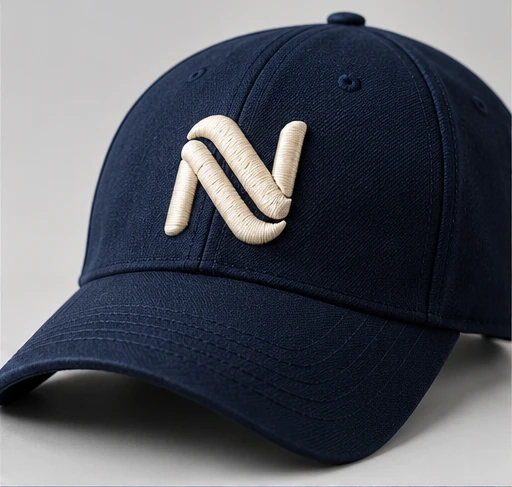
Illustrative design concept
A CONSIDERED APPROACH
Built around the way
you’ll use it.
Puff embroidery uses foam beneath the stitches to build a raised surface. It works best with suitable shapes and adequate stroke width. Tiny details and narrow text often need a flat-stitch alternative.
01
Suitable artwork
Bold shapes and clear lettering are easier to adapt than fine or highly detailed marks.
02
Foam & thread
Confirm the intended foam and thread choices with the production team.
03
Flat versus raised
Identify which parts should be raised and which should remain flat.
BEFORE YOU START
A clearer brief.
A better starting point.
Use your clearest source artwork. Include the finished size, application and required date. Confirm price, deliverables and timing before placing an order.
✓ Source artwork
✓ Finished dimensions
✓ Fabric or material
✓ Required format
✓ Deadline & quantity
Illustrative service concept
CHOOSE BY APPLICATION
Where this service
makes a difference.
01
Bold cap initials
Use broad, simple letters where a raised finish is part of the design identity.
02
Dimensional brand marks
Raise selected suitable shapes while leaving supporting detail flat.
03
Limited merchandise
Build a tactile focal point with a restrained design rather than adding height everywhere.
KNOW YOUR OPTIONS
Small choices.
A different finished result.
These decisions help define the project before the artwork or production plan is approved.
3D Puff Digitizing: decisions to confirm
| Decision | What to specify | Why it matters |
|---|---|---|
| Raised or flat areas | Mark the exact shapes that should use foam. | Fine supporting details often need a separate flat treatment. |
| Stroke shape | Review narrow areas and abrupt changes in letter width. | A shape that looks good in print may not suit a puff finish. |
| Open ends and counters | Discuss how the shapes should finish and remain visually clear. | Foam coverage and edge closure need application-specific planning. |
ILLUSTRATIVE PROJECT BRIEF
Put the details into context.
A navy cap with a raised initial and a small flat supporting line. Identify the raised letter, flat text, cap construction and final dimensions separately.
BEFORE YOU SAY YES
Review the details.
Then take the next step.
A screen preview is one part of approval. Check the details that matter to the actual application.
01
At actual size
Review lettering, counters and the balance of the design at the dimensions that will be stitched.
02
On the intended fabric
Run a sample using the chosen garment material, stabilizer, thread and machine setup.
03
Through the sewing sequence
Check registration, thread behavior and how the finished design sits on the material.
04
Before a full batch
Record any changes clearly and approve the revised sample before production.
ABOUT THIS SERVICE
3D Puff Digitizing
questions, answered.
More questions about your design? Include the specific application and your artwork when you prepare your brief.
Can every font be made into 3D puff?
No. Bold, suitable forms are generally more practical than very thin or intricate lettering. The actual font and finished size need review.
Can flat and raised embroidery appear together?
Yes, a mixed finish can be planned, but the separate areas and sequence should be defined in the brief and checked in a sample.
What should I include with a change request?
Include the file or project reference, exact dimensions, a clear description and photos of any sew-out issue. Say whether the fabric, placement or machine setup has changed.
Is a digitizing request a finished garment order?
No. Digitizing prepares a digital embroidery file. Any physical garment, sewing or patch-production requirements should be specified and confirmed separately.
MORE TO EXPLORE
Find the right fit.
RELATED PORTFOLIO / EMBROIDERY & DESIGN
Explore the portfolio.
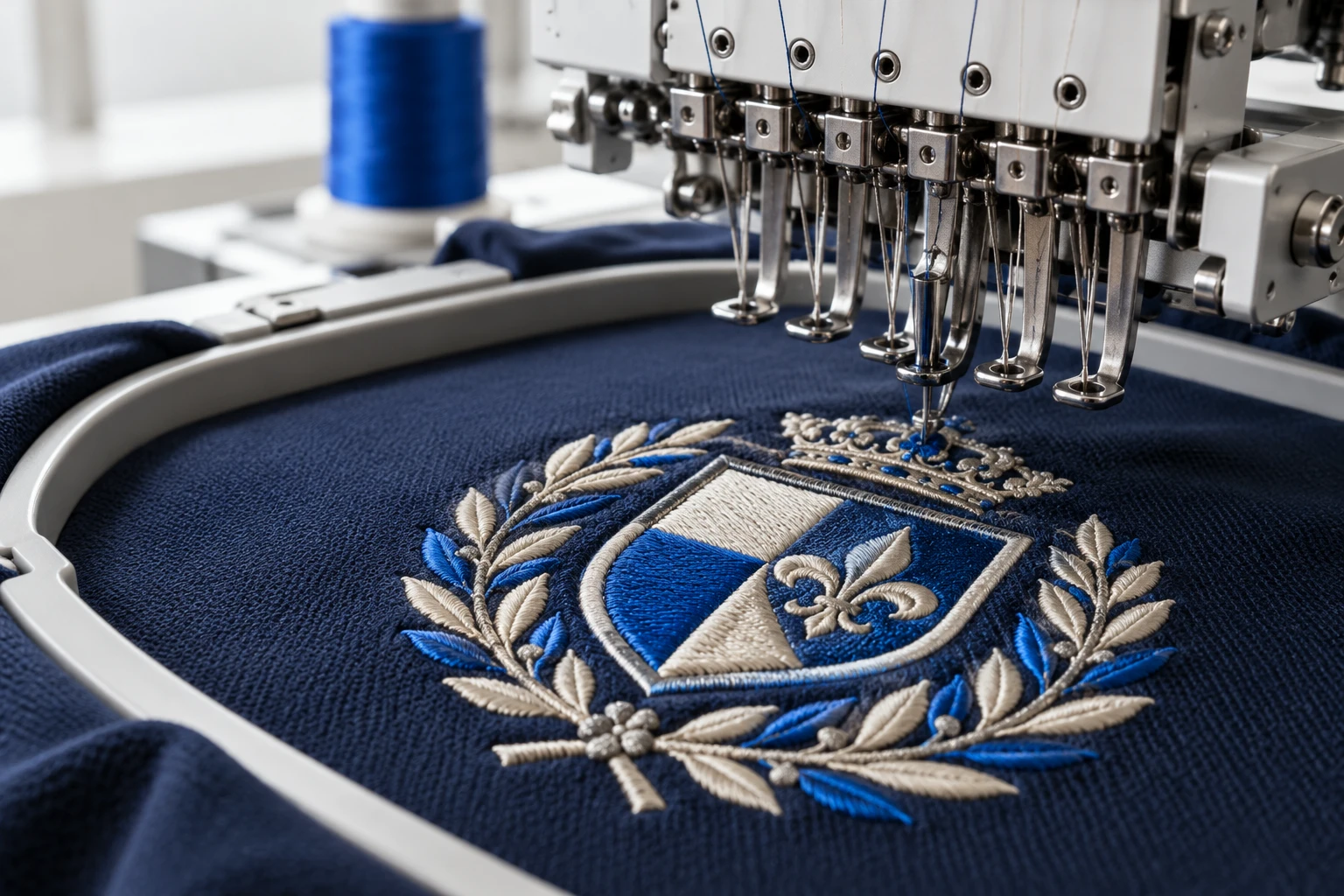
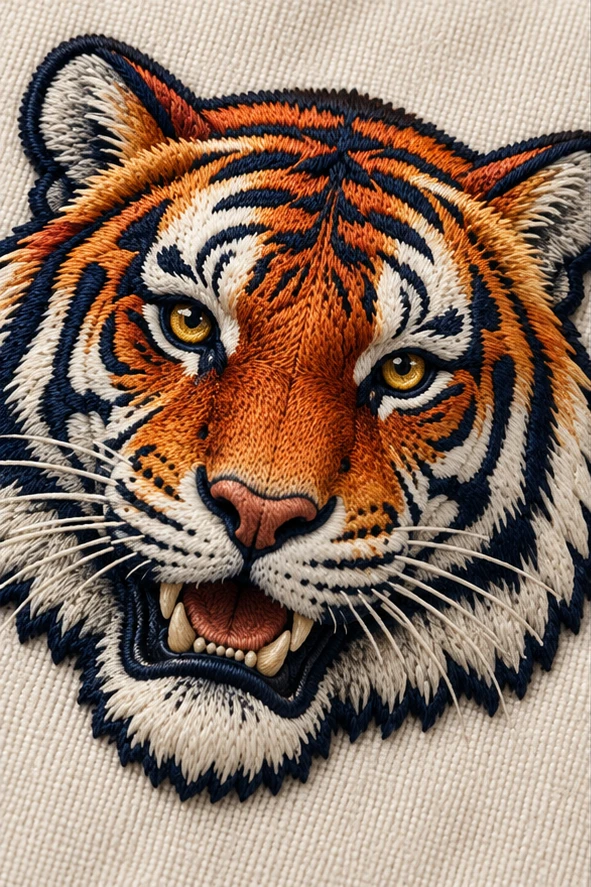
Explore artwork, texture and finish through illustrative design concepts.
Raised cap monogramCap & 3D puff digitizing
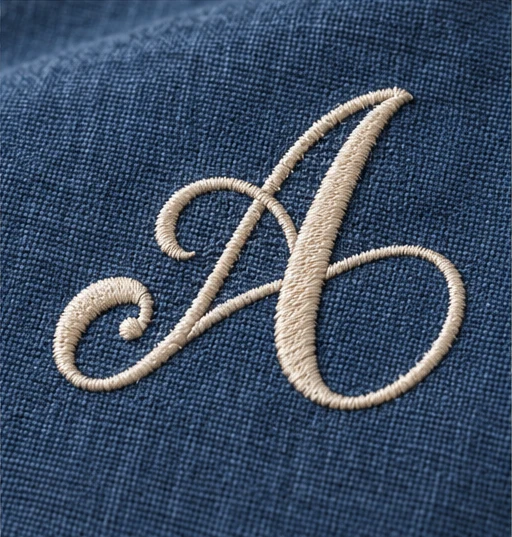
Script monogramLettering & personalization
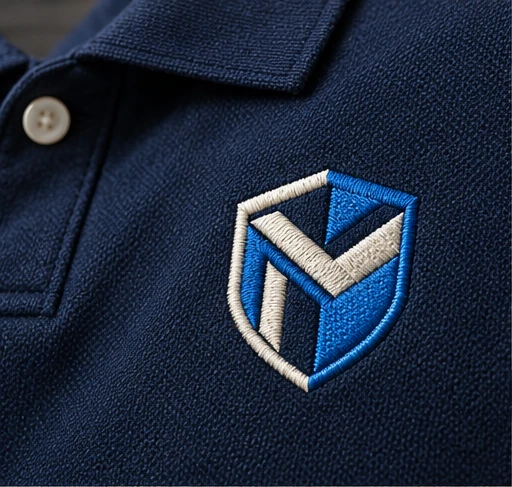
Corporate chest emblemLogo & left-chest digitizing
Illustrative design concepts created to show visual styles and materials. These are not documented customer projects or physical production samples.
LET’S PLAN THE DETAILS
Have a project in mind?
Start with your artwork, finished size and intended application.